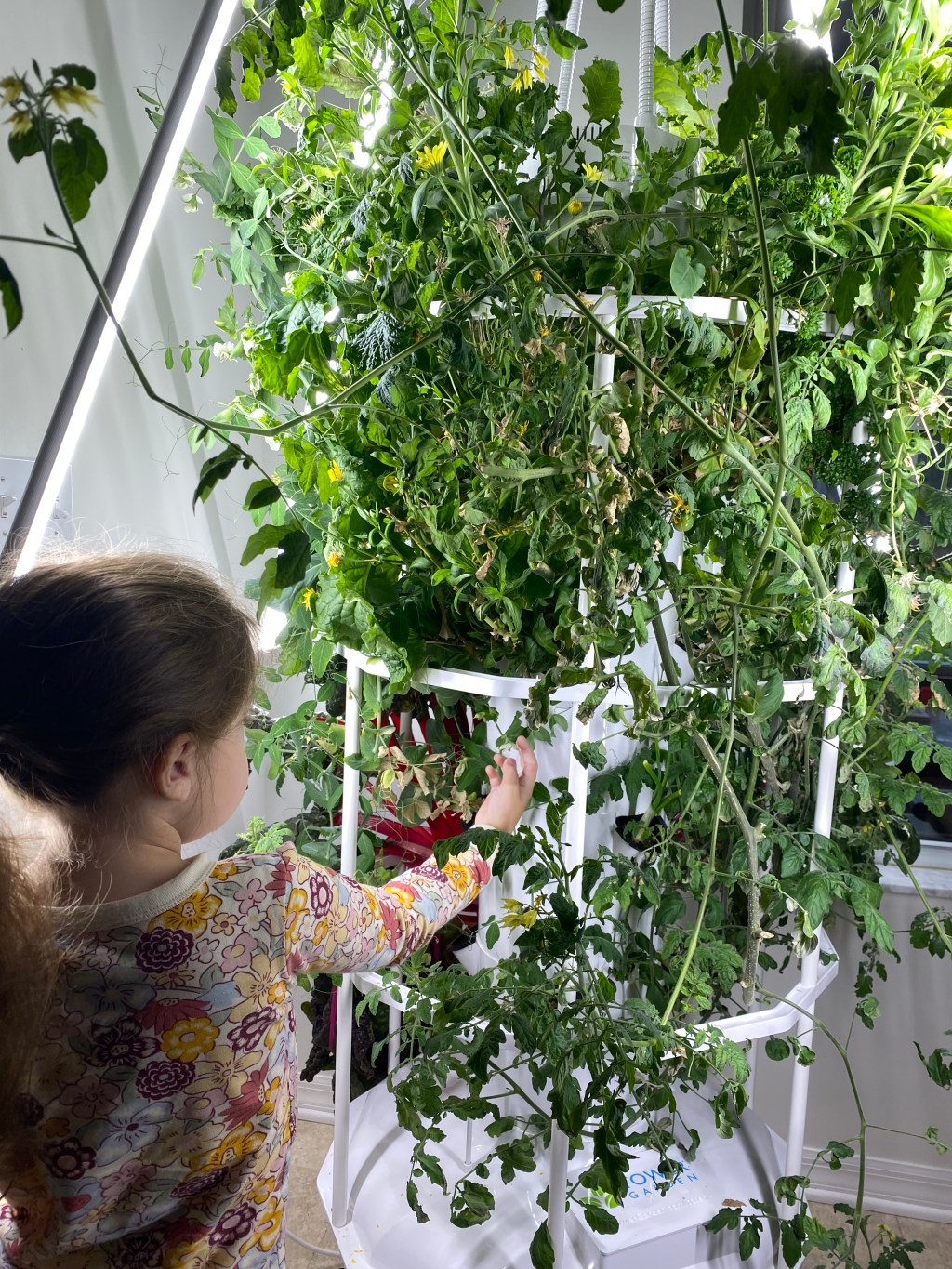
Plus, would I buy one again?
We have been using the Tower Garden Home with grow lights and the support cage for the last 12 months. We have grown a variety of salad greens, my favorite tomatoes, herbs, flowers, broccoli, peas, and more. After one year of growing, I feel like I can give a more comprehensive account of my opinion of the good and bad of this investment. I hope this helps you as you evaluate if it may be a good fit for your home or classroom.
Pros:
—It reliably produces an abundant harvest. It is mostly a controlled environment, so if you were growing for a small business I think there would be less risk.
—We have not had any pest issues. Can you imagine growing juicy tomatoes without a hornworm decimating your plant overnight? This will give you that.
—You can grow food regardless of where you live. This is one of the reasons I wanted to do this with my daughter. I wanted to model for her from a young age that she could grow her own food anywhere — apartment, home, indoor, outdoor, etc.
—It is good option for individuals with mobility challenges. There is minimal bending or lifting required (you may just need to ask someone else to refill the reservoir or use a hose). I sometimes have debilitating inflammatory arthritis and I would be able to manage continuing to grow on the Tower Garden during a flare when I could not even walk to my outdoor garden.
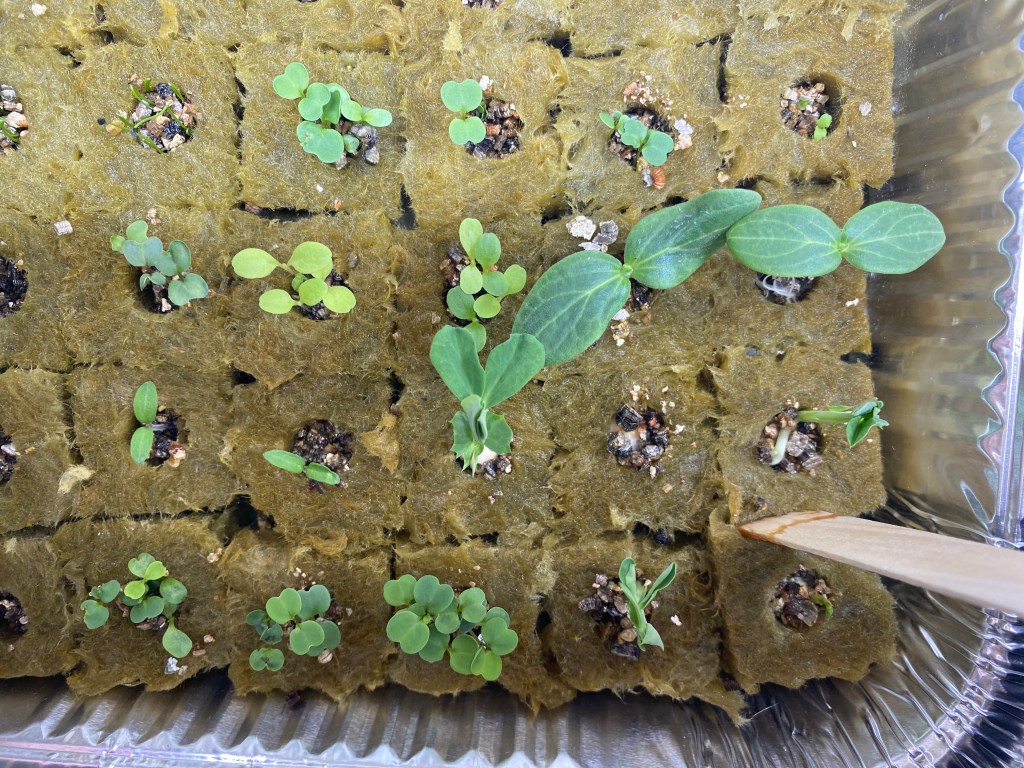
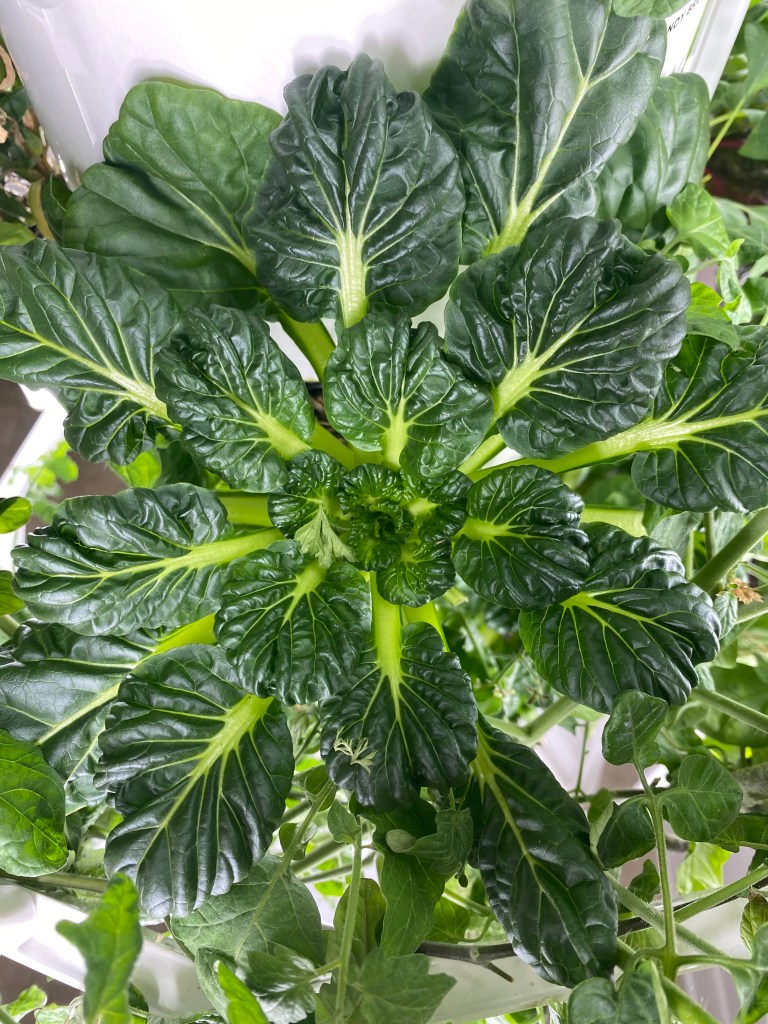


—The educational benefits are many. I have a Kindergartener and here’s what we have used the Tower Garden to learn: addition, multiplication, division, plant lifecycles, fine motor skills (including using scissors to harvest), gross motor skills (toting water jugs to refill the reservoir), plant identification, spelling and reading (creating plant labels with a label maker), food preparation (seed to table), and creating habits of caring for living things. It is a great example of using concrete materials to learn abstract concepts — a hallmark of The Montessori Method.
—You can manipulate the seasons. I’ve grown tomatoes in winter and lettuce in summer. You set the number of hours your grow lights are on and the temperature in your home; the water pump is on a timer. No rain dance needed to be successful here.
—Your picky eater may try new foods. My little one does not like to try new things. There is one exception to this. If she picks it off of the plant, then she will most often try it. I am not sure if that is because there is no felt demand to eat the food (as opposed to it being on a dinner plate), or something else. It is a consistent enough occurrence to mention the phenomena here.

Cons:
—It is VERY bright. Some people use a wood slatted room divider or curtain to shield the light, but I personally enjoy seeing the plants grow everyday so we have just adapted to expect the light. It is on wheels so if I wanted a break, then I would just roll it into the laundry room.
—It is loud. We unplug the water pump at night so it doesn’t wake the light sleepers in the house. I have seen no negative impacts on the plants from doing this. During the day, I personally find the water peaceful, and maybe it adds some positive feng shui to the house too…
—Your plants may die in hurricane season/severe weather events unless you have a backup power source. We lose power for a few days every hurricane season. It’s just something we have come to expect. The power companies prioritize densely populated areas over rural ones so we are near the bottom of their list every time. If I plan ahead, then I try to have mature plants around August and September because they recover more easily than baby plants, and if the power is out for an extended period of time, then we can harvest them and eat them.
—You have to hand pollinate some plants. I think this is a good activity for kids to do, but I prefer to see it happen in nature so I grow parthenocarpic or self-pollinating varieties.
—It doesn’t model the symbiotic relationship of nature or provide a prompt to get your family outside more like an outdoor garden would.
—There is an ongoing maintenance expense to continue growing. You will need more nutrients and rockwool eventually and you are obviously adding another “appliance” that you will need energy to power. I personally have not noticed an increase in our electricity bill beyond our normal seasonal fluctuations.
—It is not as sustainable as an outdoor garden. You have to provide the elements for your plants to grow. It is made of plastic. There is a tradeoff here. It is not the beautiful circle of life that a healthy outdoor garden is, and it is not trying to be.
So, would I buy one again? Yes, I would and we will continue to grow in it because it serves its own purpose. If I didn’t have an outdoor garden (and could), then I would start there. I just find so much value and purpose in nurturing the land we live on and observing and participating in the beautiful cycle of the seasons with plants and animals. You cannot replicate that. That said, I do love our Tower Garden and the up close view we get of using technology to grow food when growing outside may not be possible. It is more important to me that we grow our own food and rely less on outside food systems, than it is to be purists about doing it “perfectly”.
I hope this helps you on your gardening adventure.
Happy growing!
–Sunshine

 BLOOMS WITH SUNSHINE
Leave a comment